
Technology That Helps You Do More
Recovering from a stroke, brain injury or spinal cord injury, or living with a condition such as multiple sclerosis or cerebral palsy, often means practising movements hundreds of times before they start to feel good and successful. Rehabilitation technology can help make that possible. Various pieces of equipment support weak muscles, ease stiffness, boost ease of repetition and provide feedback, so every session counts.
At Let’s Go Physio, we use and can arrange access to some of the most advanced neurological rehabilitation technology available. But technology is only ever part of the picture. Every device we recommend sits within a hands-on physiotherapy plan, built around your goals and delivered by our specialist neurological team.
How It Works
- Free telephone consultation. We talk about your condition, your goals and the technology you’re curious about.
- Specialist assessment.
- Your physiotherapist assesses your movement, walking and muscle tone, and checks whether a device is safe and suitable for you.
- Trial and fitting. Where appropriate, we arrange a trial of the device, either in clinic or alongside our partner orthotists and manufacturers.
- Integrated therapy. We build the technology into your physiotherapy programme, monitor your progress and adjust settings as you improve.
- Ongoing support. We teach you, your family and carers how to use the device safely at home, school or work, and review it regularly.
The Technology We Use
Functional Electrical Stimulation (FES)
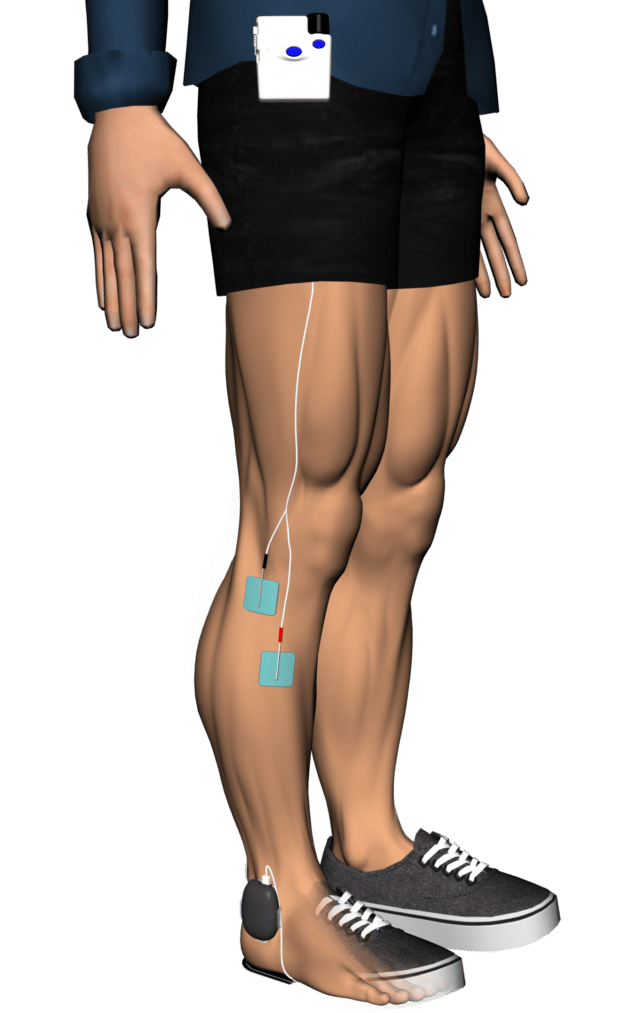
Functional electrical stimulation uses small electrical pulses, delivered through electrodes on the skin, to activate nerves and muscles that aren’t working as they should. It’s most commonly used to treat foot drop, helping lift the front of the foot at exactly the right moment as you walk. FES can also be used to support arm and hand movement, standing and cycling.
Our trained therapists assess and fit both upper and lower limb FES stimulators. FES for drop foot of central neurological origin is supported by NICE guidance (IPG278).
FES may help to:
- Lift the foot during walking and reduce trips and falls
- Improve walking speed, confidence and endurance
- Strengthen muscles and re-educate movement
- Reduce spasticity and improve joint range
- Reduce the effort of walking, so you can go further
Odstock ODFS® Pace and Pace XL
Developed by Odstock Medical in Salisbury, the ODFS Pace is one of the UK’s most established FES systems for foot drop. A small sensor in your shoe detects when your heel lifts, triggering a gentle pulse to the nerve that lifts your foot.
The Pace XL works wirelessly, removing the need for a cable running up the leg.
Who it may help: adults and children with foot drop caused by stroke, multiple sclerosis, spinal cord injury, cerebral palsy and other upper motor neurone conditions.
Exopulse Suit (Ottobock)
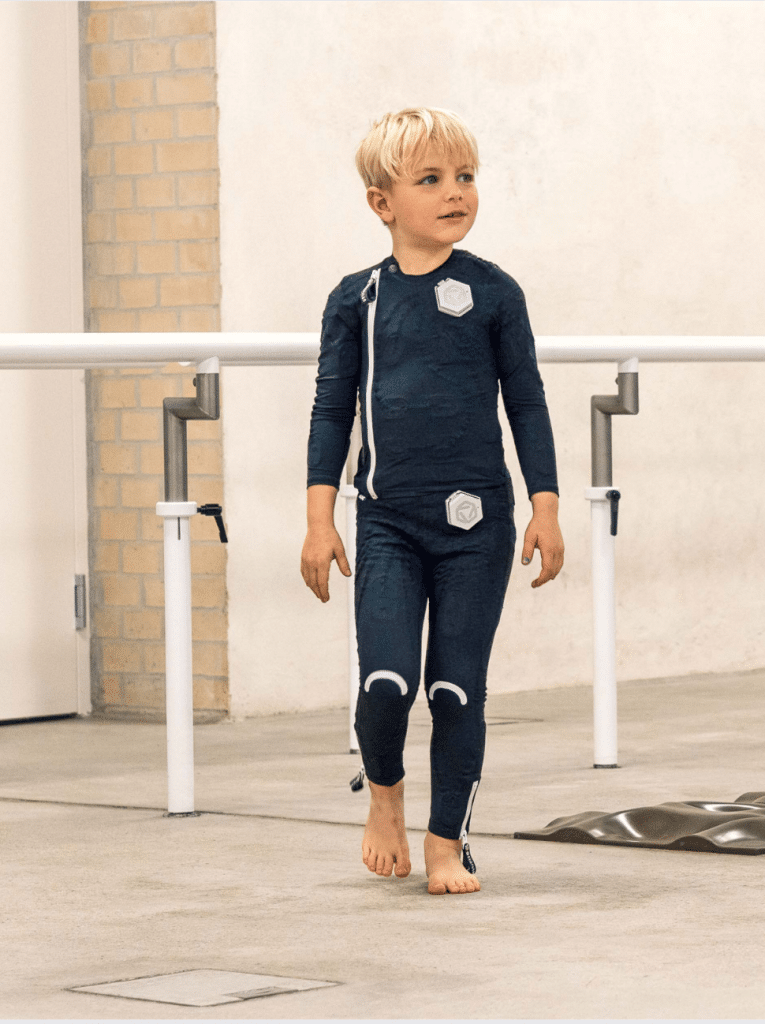
The Exopulse Mollii Suit is a wearable neuromodulation suit, made up of a jacket and trousers with 50 built-in electrodes. Each suit is programmed to your individual needs. It gently stimulates the muscles that work opposite to tight, spastic muscles, helping them to relax.
A typical programme involves wearing the suit for an hour, usually every other day, at home, at school or in clinic. Many people use it before a therapy session or activity, to make the most of the period afterwards when muscles feel looser.
The Exopulse Mollii Suit may help to:
- Reduce spasticity and muscle stiffness
- Ease pain
- Improve mobility, balance and posture
- Make stretching and active exercise easier
Who it may help: children and adults with cerebral palsy, functional neurologic disorder, stroke, multiple sclerosis, acquired brain injury, parkinsons disease, spinal cord injury and other conditions affecting muscle tone.

Neurological Exoskeleton Rehabilitation
Exoskeletons and powered orthoses are wearable devices that support, assist or resist movement at the joints. Rather than doing the work for you, the latest devices respond to how you move in real time, helping you practise a more natural walking pattern with greater safety and confidence.
SpryStep® Agilik™ (Thuasne)
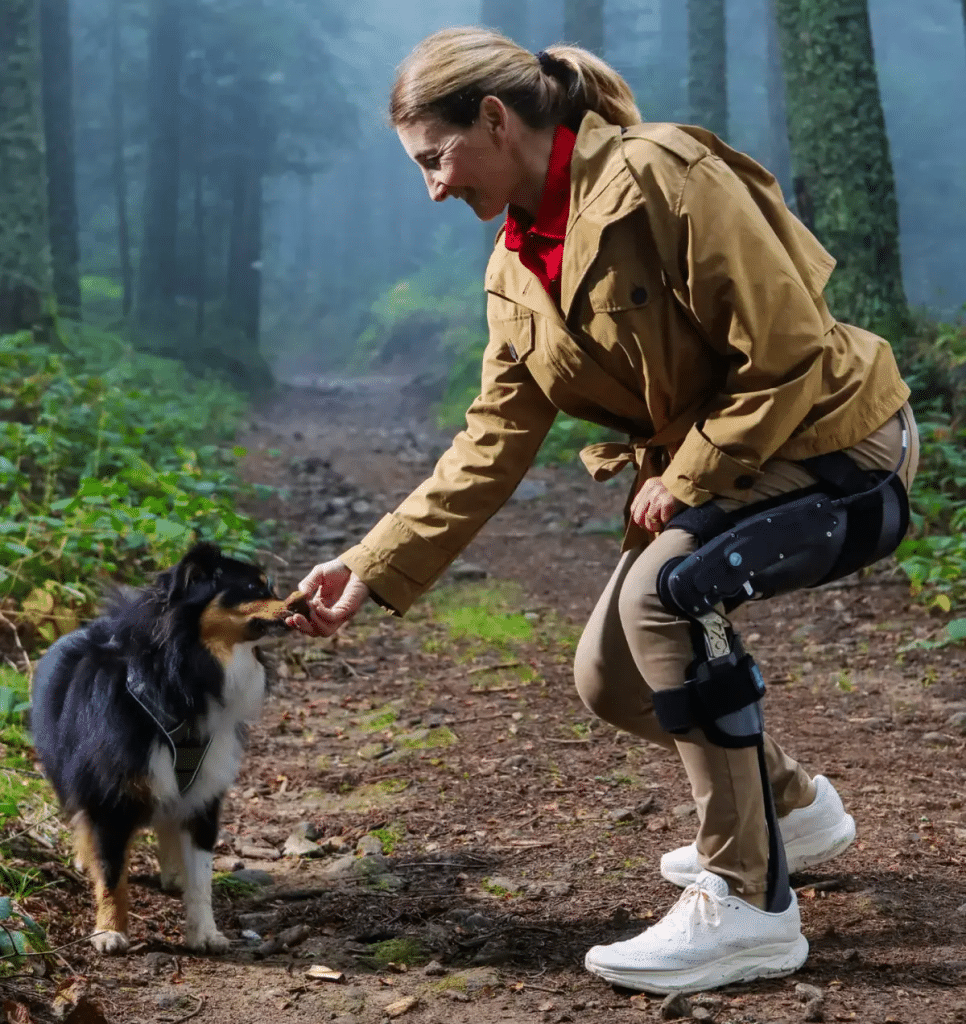
Agilik is a lightweight, powered smart knee orthosis designed to help children and adults who walk with a bent-knee or “crouch” gait. Worn as part of a custom-made KAFO, it detects each phase of your walking cycle and delivers assistance or resistance at the knee at exactly the right moment. Your therapist tunes the settings through an app and can track progress over time.
Because it can both assist and resist movement, Agilik supports walking practice and muscle strengthening at the same time.
This device is designed to be worn throughout the day indoors and outdoors for all walking and stair climbing. The assistance it provides is amazing, helping you improve your balance and walking quality while wearing the device and afterwards.
Who it may help: children aged five and over and adults with knee weakness affecting their walking, including cerebral palsy, spina bifida, muscular dystrophy, incomplete spinal cord injury and stroke.
C-Brace® (Ottobock)
The C-Brace is a microprocessor-controlled knee-ankle-foot orthosis (KAFO). Sensors track the position of your leg and your walking speed, and the brace adjusts its hydraulic knee resistance in real time. It holds the knee securely when you put weight through it, then allows it to bend freely as you step through.
This means people who would otherwise rely on a locked knee brace may be able to walk with a more natural walking pattern, manage slopes, stairs and uneven ground, and sit down in a controlled way. A C-Brace Interim version is also available for use earlier in rehabilitation.
Who it may help: adults with leg weakness or paralysis, including incomplete spinal cord injury, transverse myelitis and post-polio syndrome. We’ll work alongside specialist orthotists to assess suitability.
Robotic-Assisted Gait Training
Robotic gait training use a supportive harness and powered leg or foot plates to guide your legs through a walking pattern, often while part of your body weight is supported. This allows people who can’t yet walk safely, or can only manage a few steps, to practise many hundreds of repetitions in a single session.
Robotic-assisted gait training may help to:
- Retrain walking patterns through high repetition
- Build strength, endurance and cardiovascular fitness
- Improve confidence and reduce fear of falling
- Provide data on your progress from session to session
- We can help arrange assessments for the Trexo Walker
Why Choose Us
Our team is led by founder Claire Ingham, who is trained to an advanced level in Bobath and MAES concepts and has extensive experience with complex neurological conditions. We don’t recommend technology for its own sake. We recommend it when we believe it will help you reach a goal that matters to you, and we stay with you every step of the way.
All our physiotherapists are HCPC registered, members of the Chartered Society of Physiotherapy and hold enhanced DBS checks. We support both adults and children, and work closely with families, the NHS, case managers and other professionals involved in your care.
What Our Technology-Assisted Rehabilitation Includes
- A full neurological physiotherapy assessment before any device is recommended
- Clear, honest advice about whether a device is likely to help you
- Device trials, fitting and set-up, with our in-house and partner orthotists and manufacturers where needed
- Integration with hands-on physiotherapy, gait training and home exercise programmes
- Outcome measures and, where available, 2D gait analysis to track your progress
- Training for you, your family, carers, school or care staff
- Support with reports and funding applications for case managers, solicitors and funders

Bringing Specialist Physiotherapy to You
Technology works best as part of a wider plan. That’s why we always combine it with the hands-on treatment, practical goal setting and ongoing support our clients know us for.
We are a team of highly experienced paediatric and adult treating physiotherapists across the North West of England. We are all HCPC registered and members of the Chartered Society of Physiotherapists.
With a wealth of knowledge and skills in physiotherapy, moving and handling and legislation.
You can contact us for a free telephone consultation to discuss moving and handling. Please get in touch below.
Next steps
We understand that it’s very important that you access the right support and training for your school.
If you’re interested in learning more about our support and manual handling training services, or if you have any questions, please get in touch with our friendly team.
Call 01282 222720 or email info@letsgophysio.co.uk.

Get in touch with a member of our friendly team
Office 3
Northlight Estate
Northlight Parade
Nelson
BB9 5EG
Make an enquiry
Our accreditations


