
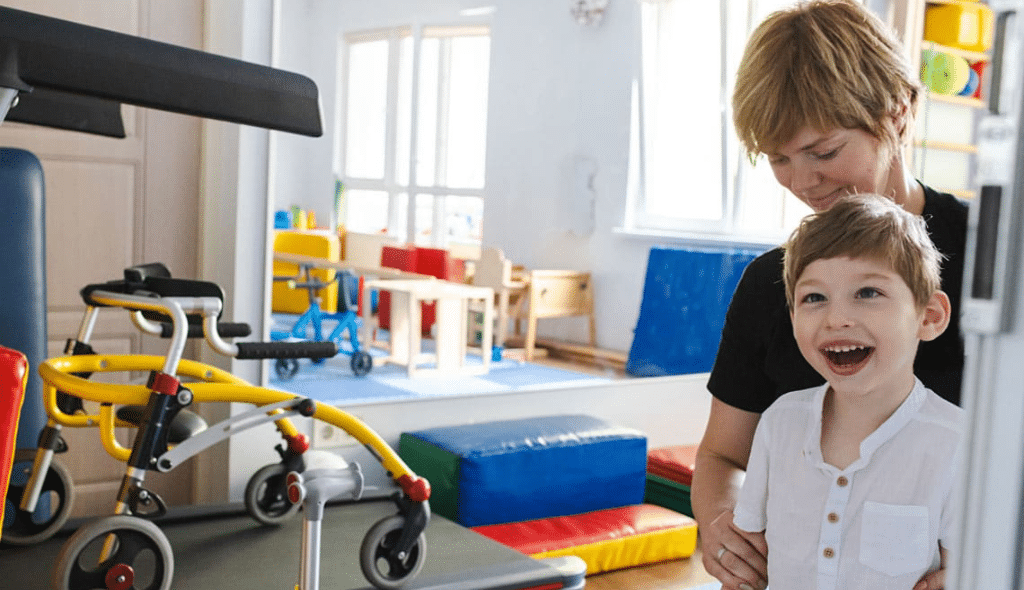
MAES (Movement Analysis & Education Strategies) Therapy is a specialised, holistic intervention for babies, children, and adults with neurodevelopmental movement disorders, including cerebral palsy.
Rather than simply correcting movement, the approach focuses on understanding why an individual moves in a particular way.
Developed by Jean-Pierre Maes after more than 30 years of clinical experience in cerebral palsy and related neurodevelopmental conditions, MAES is a physiotherapy framework that examines how the brain organises and coordinates movement.
By analysing these underlying processes, MAES provides tailored learning opportunities that help individuals develop new, more functional movement patterns, supporting improved long-term outcomes.
Understanding Neurological Development
The approach is suitable for babies and children of all ages whose neurological challenges prevent typical developmental progression. MAES Therapy seeks to understand how the child’s brain coordinates the body and what this reveals about their perception, understanding, and interaction with their environment.
Instead of focusing solely on physical symptoms, it considers the child’s overall experience and developmental pathway.
Because neurodevelopmental conditions affect the brain’s ability to create typical learning experiences, children often follow alternative developmental routes. This can lead to limited exploration and reduced opportunities to acquire new skills.
MAES Therapy addresses this by offering safe, structured experiences that encourage exploration, learning, and skill acquisition, experiences that the child is unlikely to develop independently.
A Different Approach
Children naturally adopt the easiest strategies to achieve immediate results, but these short-term compensations can lead to poor-quality, restricted movement patterns that hinder long-term development. These compensatory strategies become ingrained and form the basis of atypical movement. For this reason, MAES Therapy does not prioritise short-term task completion. Instead, it focuses on laying the foundations for reducing atypical development over time and expanding the child’s potential for more effective movement outcomes.
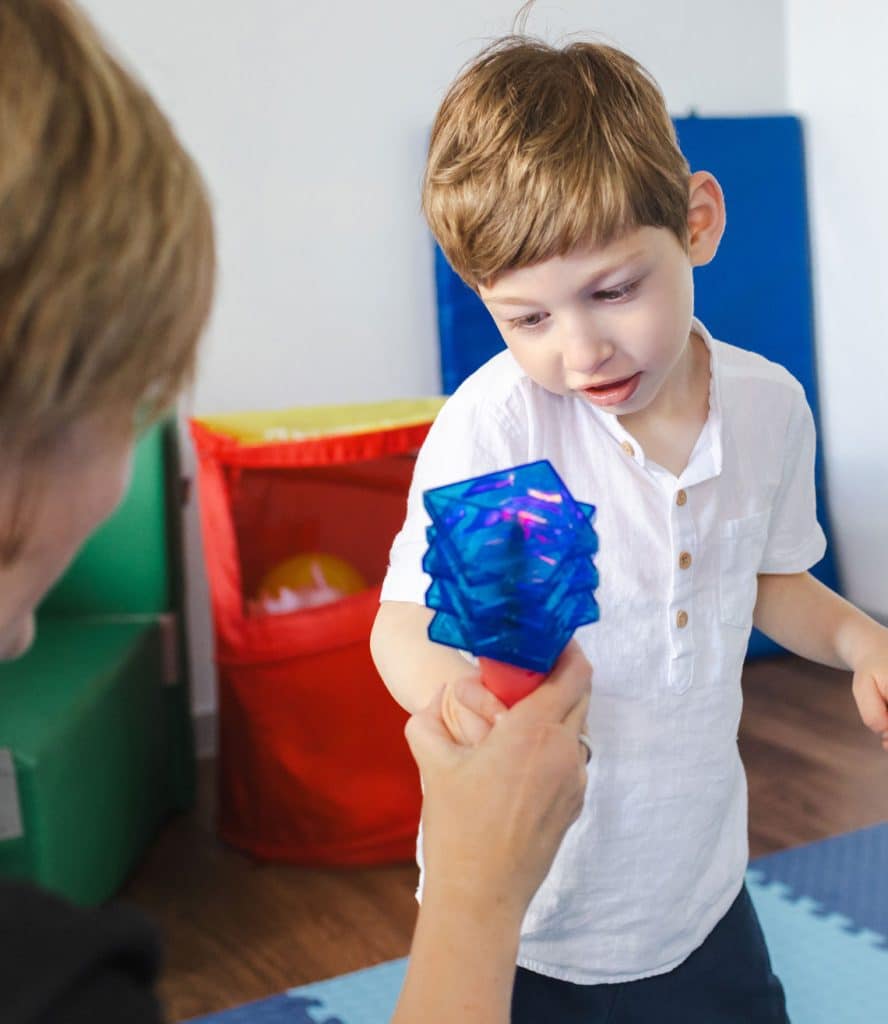
Therapy sessions involve precise, skilled handling that integrates movement, cognition, and play. This supports the child through a structured learning process, guiding them toward new skills and helping them reach their full developmental potential.
Key Aspects of MAES Therapy
- Holistic & Child-Centred: Considering the child's overall experience, perspective, and interaction with the world, not just their physical symptoms.
- Movement Analysis: Analysing the underlying causes of movement difficulties, identifying underdeveloped coordination processes.
- Education-Focused: Teaching parents and carers how to interact and provide experiences that foster development, creating pathways for new skills.
- Beyond Milestones: Focuses on building foundational skills for better function, rather than just achieving short-term developmental milestones.
- Specialised Handling: Uses highly skilled, hands-on techniques to guide movement, cognition, and play.
Who MAES Therapy Helps
- Babies and children with cerebral palsy (CP).
- Individuals with Erb's palsy, acquired head injuries, movement disorders and other neurodevelopmental conditions.
Who MAES Therapy Helps
- Improve coordination and develop new movement combinations.
- Create new learning opportunities for those whose neurological conditions limit typical development.
- Provide effective, long-term functional improvements.
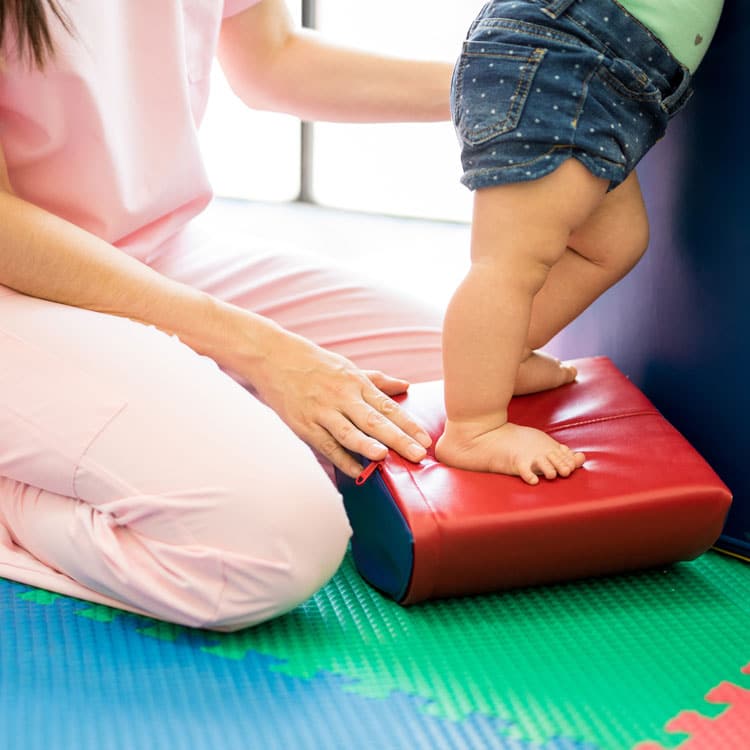
Children with neurodevelopmental conditions learn and develop differently because their brains process movement in unique ways. When part of the brain is affected, it can make it harder for a child to figure out how to move or coordinate certain actions. This means that simply practising a skill, like walking, without addressing the underlying difficulties, is often frustrating and doesn’t lead to lasting improvement.
The MAES Way
MAES Therapy works by looking closely at how a child moves and identifying which parts of the movement are most challenging. Therapists then create fun, targeted activities that help the child strengthen these weaker areas. By focusing on the building blocks of movement, children can gradually develop the skills they need to perform the full activity more confidently and effectively.
How we can help
The physiotherapists at Let’s Go Physio are experienced in carrying out the MAES techniques. Our friendly and caring approach means that you can be confident you are receiving treatment of the highest quality.
For more information about treatments at Let’s Go Physio or to book an assessment, please call us today on 01282 222720 or get in touch here.